
Our Story
About One Simple Thing

Founder & Director
How It Began
The world does not need more people who care about everything. It needs more people who care deeply about one thing.
One Simple Thing began with a question: why do so many people who genuinely love nature feel paralyzed when it comes to protecting it? The answer, we found, was not a lack of caring — it was a surfeit of it. The scale of environmental challenges can make any individual action feel absurd.
The antidote is not to care less broadly. It is to care more specifically. To choose one amphibian, one bird, one ecosystem, one insect, one issue, one mammal, one plant, one reptile, one sealife, or one watershed — and to give it your full attention. To learn it. To help it. To tell its story.
That is the whole idea. One Simple Thing is the framework, the community, and the invitation to begin.
Our Mission
"To cultivate a generation of people who know one living thing deeply — and who act from that knowledge with intention, discernment, awe, and gratitude."
What We Stand For
Four words. A lifetime of practice.

Awe
The recognition that the world is larger, stranger, and more intricate than we can fully comprehend — and that this is a gift, not a problem.
Awe is the beginning of everything. It is what makes a child stop and stare at a beetle. It is what makes a scientist spend a lifetime on a single species. It is what makes a person, standing at the edge of a vast landscape, feel simultaneously small and deeply connected. We believe awe is not a luxury. It is a necessity — and it is available to anyone who chooses to look.

Discernment
The capacity to see clearly — to distinguish between what you have been told and what you have actually observed. Discernment is not skepticism. It is the discipline of paying close enough attention that you earn your own understanding.
We live in an age of overwhelming information about the natural world — much of it alarming, some of it contradictory, and very little of it personal. Discernment asks us to slow down. To read carefully. To sit with a question before accepting an answer. To know the difference between a headline and a truth.

Gratitude
Not a feeling to perform, but a practice to cultivate. Gratitude is what happens when you pay enough attention to something to understand what it gives you — and what it costs to lose it.
Gratitude is the antidote to numbness. It is what keeps us from sliding into despair when the news is bad, and from sliding into complacency when it is good. To be genuinely grateful for one living thing — to know its name, its role, its story — is to have a stake in its survival that no statistic can provide.

Intention
Every change, every action, every act of care begins here. Intention is the moment you decide that one living thing deserves your attention — and that your attention is worth giving.
Before you can protect something, you have to choose it. Intention is that choice, made consciously and held over time. It is not a grand gesture. It is a quiet, daily decision to show up — to learn, to notice, to act — for one thing you have decided matters. The world does not change all at once. It changes one intention at a time.
Our Orientation
We are eco-optimists. Not because the news is good — but because despair is not a strategy.
Eco-optimism is not the same as eco-complacency. We do not pretend the challenges are small. We do not look away from loss. We hold the full picture — the extinctions, the warming, the degradation — and we choose to act anyway.
We choose to act because the evidence supports it. Species have recovered. Ecosystems have been restored. Rivers have been freed. Forests have returned. These things happened because specific people made specific choices to help specific living things.
That is what we are asking you to do. Not to fix everything. Just to begin.
How We Work
Ten categories. One principle.
The most threatened vertebrate class on Earth. Amphibians are the indicator taxon for water quality — their presence signals a healthy watershed, their absence signals a broken one.
Choose a bird — from condors soaring over California to warblers crossing continents. Learn its migration, its habitat, its threats. Become its advocate.
Choose a place — a forest, a reef, a prairie, a wetland. Learn what makes it whole, what threatens it, and what restoration looks like.
Choose a pollinator, a decomposer, a predator. The smallest creatures carry the largest ecological weight. Learn one. Protect its habitat. Tell its story.
Choose an environmental challenge — ocean acidification, habitat loss, species extinction. Understand its causes, its consequences, and the work being done to address it.
Choose a mammal — wild, migratory, endangered, or recovering. Learn its biology, its behavior, its role in the web of life. Find one way to help it.
Choose a species — native, ancient, overlooked, or beloved. Understand its ecology, its relationships, its threats. Plant it, protect it, or advocate for it.
From desert tortoises to sea turtles, ancient survivors facing a rapidly changing world. Choose one and learn what its survival depends on.
Choose a creature of the ocean — from the microscopic to the magnificent. The sea covers most of our planet. One species, understood deeply, opens the whole.
Choose a river, a basin, a watershed. Trace the water from mountain to sea. Understand who depends on it — and what you can do to protect it.
One Principle
Always hold one intention. The specific thing may change over a lifetime. The commitment to always keep one does not.
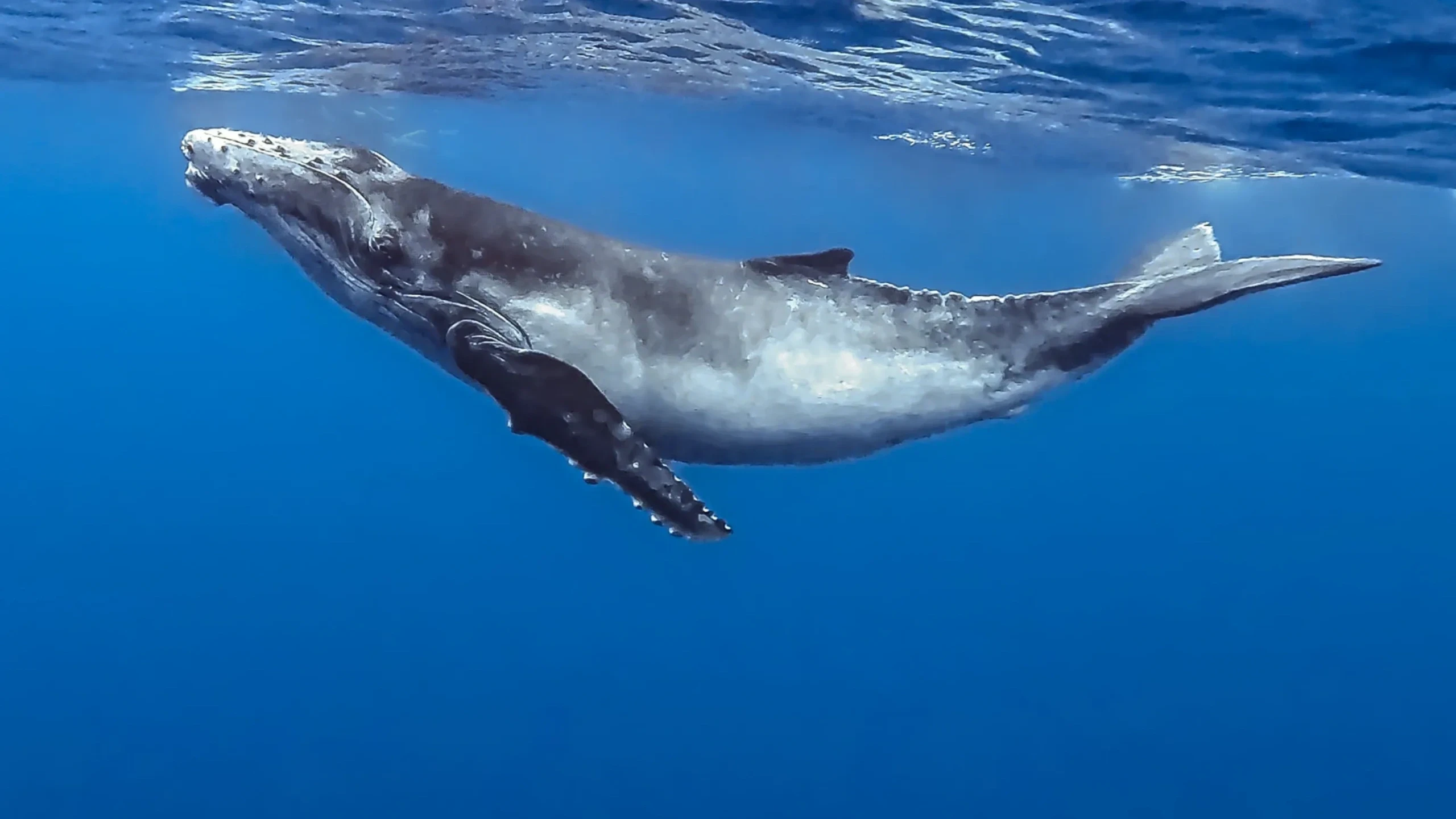
One Simple Thing is not a commitment to a single cause forever. It is a practice — a permanent orientation toward the living world. You may begin with a humpback whale and arrive, years later, at an ancient redwood forest. What matters is that you are always in relationship with something real, something specific, something that needs you.
Leadership
Meet the Director
Dr. James Dalton
Founder & Director
Dr. James Dalton is an environmental educator, depth-psychology scholar, California attorney, and business strategist whose work joins four disciplines around one question: how a single person, acting with intention, can take part in the recovery of the living world.
He holds a bachelor's degree from UC Irvine in Psychology and Economics, an MBA also from UC Irvine, a Master of Environmental Science and Management from UC Santa Barbara's Bren School, a Juris Doctor from Concord Law School, and both a master's degree and a Ph.D. in Jungian and Archetypal Psychology from Pacifica Graduate Institute.
A former UC Santa Barbara Global Studies lecturer and a K–12 educator for more than forty years, he is also a civil-litigation attorney of fourteen years, a SAG-AFTRA member of over two decades, a writer, a lifelong sailor, and an adventurer.
He is the founder and director of One Simple Thing — an eco-optimist's response to the planetary condition — touring universities and high schools across the American West in Fall 2026.
Ready to find your One Simple Thing?
Browse amphibians, birds, ecosystems, insects, issues, mammals, plants, reptiles, sealife, and watersheds — until one calls to you. Then begin.