Monarch butterfly with wings open, vibrant orange and black

The case for action

Why it matters.

The science of eco-anxiety. The theory of eco-optimism. The work of the tour. And a vision of the world we are building toward — together, one choice at a time.

The Foundation

Why this matters.

The problems are so large they can feel abstract — climate disruption, biodiversity collapse, ocean acidification, the slow unraveling of systems that took billions of years to build. And yet the most dangerous thing about the scale of these challenges is not the challenges themselves. It is the paralysis they produce. When a problem feels too big for any one person to touch, people stop reaching for it. They scroll past. They go quiet. They wait for someone else.

But here is what the science actually shows: individual actions, taken by enough individuals, do change planetary outcomes. Not because any single choice is decisive, but because collective behavior is the substrate on which policy, culture, and industry are built. The companies that changed their supply chains did so because consumers changed their habits first. The legislation that passed did so because enough ordinary people made enough noise. The cultural shifts that look inevitable in retrospect were, at the time, the result of millions of small, deliberate choices made by people who decided their actions were worth something.

What people need — what this project is built around — is agency. Not the illusion of agency, not the performance of caring, but the genuine experience of choosing something real and doing it. When a person identifies one thing they can actually do, one concrete, science-backed action that fits their life, something shifts. They stop being a spectator to the crisis and become a participant in the response. That shift is not small. It is, in fact, everything.

The Science

The science of eco-anxiety.

Eco-anxiety is not a disorder. It is a rational response to a genuine threat. The American Psychological Association formally recognized it in 2017 as "a chronic fear of environmental doom" — a persistent, often debilitating dread rooted not in distorted thinking but in accurate perception. When the world is on fire, anxiety about the fire is not pathology. It is information.

Research published in journals including The Lancet and Nature Climate Change documents the psychological toll of climate awareness across every age group, but most acutely among young people. A 2021 global survey of 10,000 young adults across ten countries found that 59 percent were very or extremely worried about climate change, and 45 percent said their feelings about it negatively affected their daily functioning. These are not fringe responses. They are the psychological signature of a generation that grew up knowing what was coming and watching the adults in charge do too little about it.

The clinical literature identifies several distinct dimensions of eco-anxiety: anticipatory grief for ecosystems and species already lost or threatened; a sense of moral injury when personal values around care and stewardship collide with the reality of systemic inaction; and a form of existential dread that is qualitatively different from ordinary anxiety because its object — the destabilization of the living world — is not imagined but real. Therapists working in this space, including those trained in the emerging field of climate-aware therapy, emphasize that the goal is not to reduce the anxiety by reducing the awareness. The goal is to metabolize the grief and convert it into purposeful action. That conversion — from paralysis to agency — is precisely what One Simple Thing is designed to support.

The Theory

The theory behind eco-optimism.

Optimism, in the context of ecological crisis, is not wishful thinking. It is not the denial of difficulty or the minimization of loss. It is, as the philosopher and depth psychologist Dr. Craig Chalquist has articulated, a disciplined orientation toward possibility — a refusal to let the magnitude of the problem foreclose the imagination of the response. Chalquist's work in ecopsychology and what he calls "enchantivision" — the capacity to perceive the world as alive, relational, and responsive — offers a framework for understanding why hope is not naive but necessary. When we experience the natural world as something we are in relationship with rather than something we are managing from the outside, the stakes of that relationship become personal. And personal stakes produce personal action.

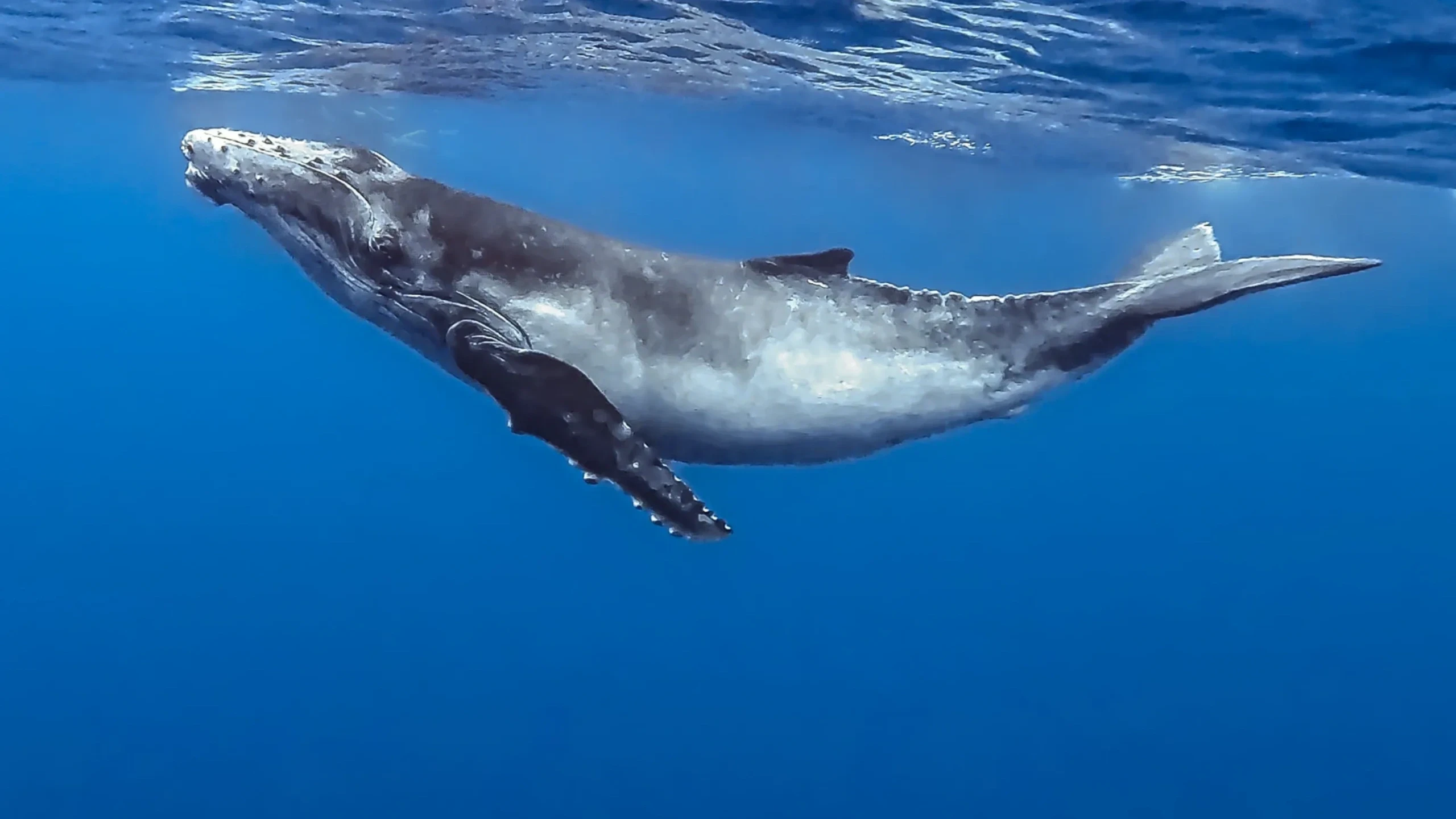
Eco-optimism is grounded in evidence. The ozone layer is recovering because humanity agreed to stop producing the chemicals that were destroying it. Humpback whale populations have rebounded from near-extinction. The Cuyahoga River, which once caught fire from industrial pollution, now supports fish. Rewilding projects across Europe are returning wolves, lynx, and bison to landscapes that had not seen them in centuries. Solar energy costs have fallen more than 90 percent in a decade. These are not small victories. They are proof of concept — evidence that when humans decide to change course, the living world responds.

The theoretical core of eco-optimism is that collapse is not inevitable. This is not a statement of certainty about the future; it is a statement about the structure of complex systems. Tipping points can run in both directions. The same nonlinear dynamics that make rapid deterioration possible also make rapid recovery possible, given the right conditions. The right conditions begin with enough people believing that their choices matter — and then making them. Optimism, in this sense, is not a feeling. It is a strategy. It is the precondition for the effort that makes the better outcome possible.

The Work

The educational tour.

In the fall of 2026, I will drive from Culver City to fifteen universities across the American West — from the Northern Rockies through the Pacific Northwest, down the Oregon and California coasts, and home to Santa Barbara. The purpose is direct and specific: to sit with students, in whatever format the campus can offer, and have an honest conversation about the living world and their place in it.

The format varies by invitation. Some visits will be large lectures — a hundred students or more in an auditorium, an hour to lay out the science, the grief, the evidence for hope, and the invitation to choose one thing. Others will be small seminars, fifteen or twenty students around a table, where the conversation can go deeper and the questions can get harder. Some of the most valuable time will be in graduate salons — intimate evenings with students who are already deep in the research, who understand the complexity, and who need not a simplified message but a genuine exchange about what the science actually says and what it means to live and work inside it. And on several campuses, I will meet with student government associations to share the One Simple Thing framework directly — to talk about how a simple, scalable idea can move through a campus culture and what it looks like when student leadership decides to carry it.

The through-line in every format is the same: I am not there to lecture students about what they should feel or do. I am there to offer them something real — the actual science of ecological resilience, the documented evidence that individual and collective action changes outcomes, and a concrete invitation to identify one thing that fits their life and do it. The goal is not inspiration that fades by the drive home. It is agency that lasts.

The Horizon

The long-term vision.

The year 2100 is not so far away. Children being born today will be in their seventies. The decisions made in the next two decades will determine, in large part, what kind of world those children inherit — and what kind of world they leave to their own grandchildren. The long-term vision of One Simple Thing is not modest: it is a world in which humanity has found its balance with the biosphere, and in which that balance is not a constraint on human flourishing but the very condition of it.

In that world, wild populations are expanding. Species that today are listed as endangered have recovered their numbers and their ranges. Forests that were cleared are growing back, not as monocultures but as complex, layered ecosystems with the full complement of species they evolved alongside. The oceans are quieter, cleaner, and more alive. The atmosphere is stabilizing. The sixth mass extinction, which is still underway, has been arrested — not reversed overnight, but turned. The trajectory is different.

Humanity, in this vision, has reached something closer to its full potential — not as the dominant species that manages the planet from above, but as the expression of consciousness and soul that the living world has been building toward for four billion years. We are the part of nature that can know itself, that can choose, that can love what it understands. That capacity is not a burden. It is a gift, and it comes with a responsibility that is also a privilege: to improve the planetary condition, generation by generation, choice by choice, one simple thing at a time. That is the work. That is the vision. And it begins now.

Ready to choose your one thing?

Browse across six categories with discernment and find the one simple thing that inspires you with feelings of awe.