Lesson 2 of 10
Awe: The Doorway
What you will learn
- 1Define awe and explain what Jung meant by the numinous.
- 2Summarize what research shows awe does to attention, mood and generosity.
- 3Guide a simple awe practice for yourself or another person.
Dr. Dalton's talk
Reading
What Awe Is and What It Does
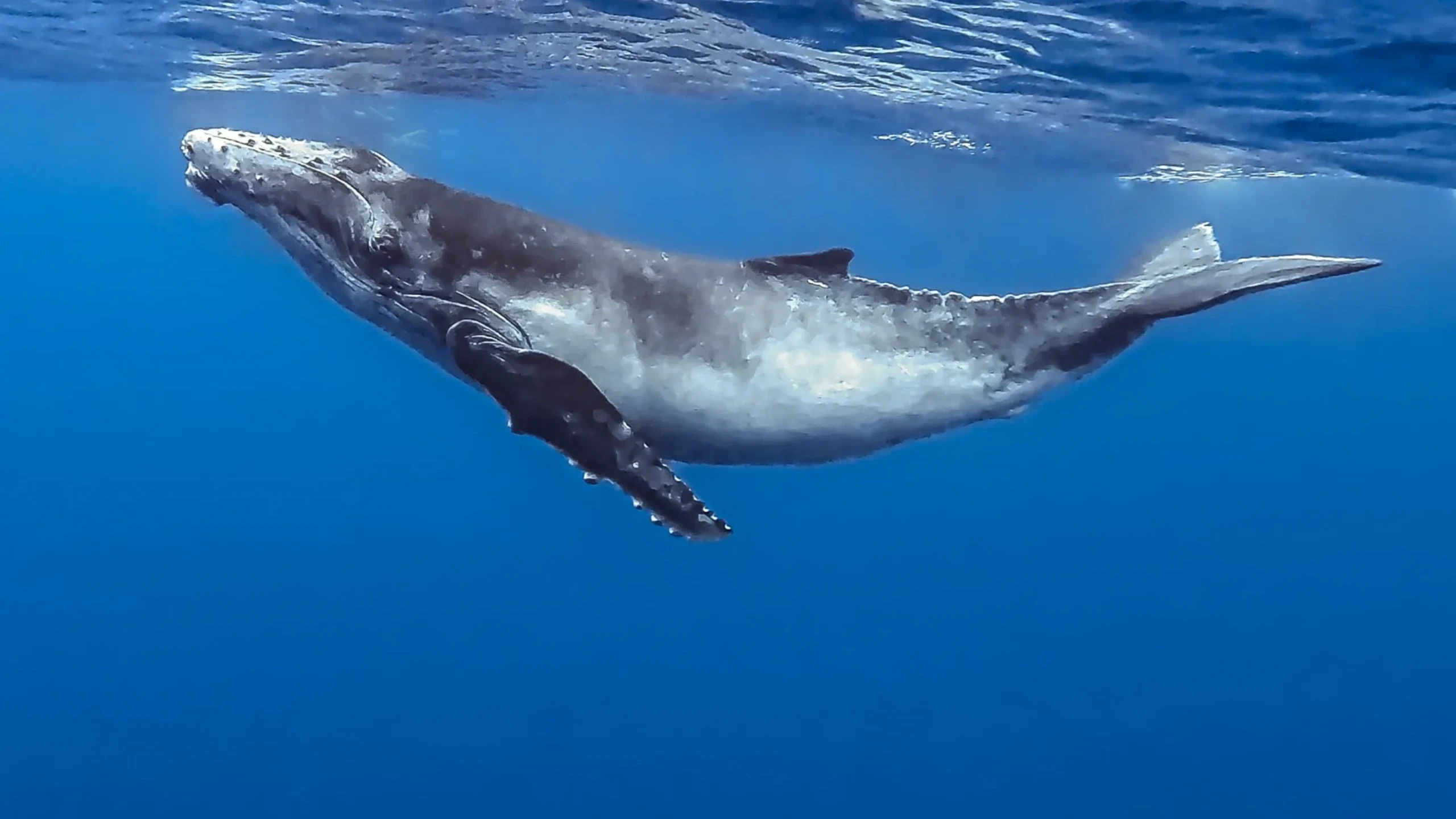
Think of a time you stopped mid-step because of something alive. A hawk hanging in the wind. A whale's back rolling out of gray water. A spider web strung with dew. For a moment you forgot your phone and your to-do list, and the world felt both larger and closer. That is awe, and it is the doorway into everything else in this course.
A definition
Psychologists Dacher Keltner and Jonathan Haidt gave awe a working definition in 2003. Awe has two parts. The first is vastness: you meet something larger than yourself or larger than your usual frame of reference. The second is what they called a need for accommodation: your mind has to stretch to take it in. Vastness does not have to mean physical size. A redwood is vast, but so is the fact that a monarch butterfly weighing less than a paperclip can travel thousands of miles to a place it has never been.
Keltner later collected about 2,600 stories of awe from people in 26 countries. Nature was one of the great sources. So were music, art, birth and death, big ideas, and, most common of all, the courage and kindness of other people. Awe turned out to be ordinary. People in his studies reported feeling it about twice a week.
Jung and the numinous
Long before awe was measured in laboratories, depth psychology had a word for its deepest form. The theologian Rudolf Otto coined the term numinous in 1917 to describe the experience of meeting something sacred, a presence that fills a person with wonder. Jung adopted the word and placed it at the center of his psychology. He was careful about what he claimed. He said we cannot prove where such experiences come from. What matters is their effect on the person who has them.
And the effect, Jung believed, is healing. He wrote in a letter that the approach to the numinous is "the real therapy." Dr. Dalton's dissertation builds on that claim. It argues that a numinous encounter is the most effective agent of change there is, because it shifts how a person sees their place among other living things. The dissertation adds an encouraging qualification: not every contact with nature is a life-changing event, but thoughtful engagement over time can build the same awareness by small steps.
Jung felt this himself. Late in life he wrote that as he grew less certain about himself, there grew in him "a feeling of kinship with all things." Albert Einstein described something similar when he called the mysterious the most beautiful thing we can experience and the source of all true art and science. Rachel Carson, the biologist whose writing helped launch the modern environmental movement, said that people who contemplate the beauty of the Earth find reserves of strength that last as long as life does.
What the research shows
Modern studies give these writers support.
Awe makes the self feel smaller, in a good way. Researchers call this the small self. Worries shrink, and a person feels part of something larger.
Awe makes people kinder. In a 2015 study led by Paul Piff, students spent one minute looking up into a grove of towering eucalyptus trees. Others spent the same minute looking at a tall building. Then a passerby "accidentally" dropped a box of pens. The students who had looked at the trees picked up more of them. One minute of awe changed how they treated a stranger.
Awe improves mood. In a study led by Virginia Sturm, older adults took a fifteen-minute walk once a week for eight weeks. Half were simply asked to walk. The other half were asked to look for things that amazed them. The awe walkers reported more joy and compassion and less daily distress as the weeks went on.
This matters for a facilitator because it tells you awe is not decoration. It is the engine. A person who has felt awe for a living thing has a reason to learn about it and care for it that no lecture can supply.
Awe is information
One Simple Thing puts it this way: awe is not a feeling to be managed. It is information. It shows where your attention belongs.
Most of us have been trained to treat such feelings as pleasant interruptions. This practice asks you to treat them as signals. When something alive stops you, ask what stopped you. Was it beauty? Strangeness? Skill? Fragility? The answer is a clue to the thing you may be meant to steward, which is the subject of the next lesson.
How to invite awe
You cannot order someone to feel awe, and you should never try. You can only set up the conditions and get out of the way. Four things help.
- Slow down. Awe needs a pause. Ask for two quiet minutes before anyone speaks.
- Go to the senses. Ask what the person sees, hears and smells. Direct attention outward.
- Go small or go large. Look closely at one leaf, or look up at the whole sky. Both shift the frame.
- Ask, do not tell. "What do you notice?" works. "Isn't this amazing?" does not.
When there is no nature at hand, memory works too. Ask a person to recall a time an animal or a place stopped them in their tracks, and to describe it in detail. You will often see the feeling return to their face as they speak.
One caution. Jung noted that people sometimes resist these experiences. Awe can be uncomfortable because it unsettles our sense of control. If someone shrugs or jokes, let it be. Never force the moment. An honest "I didn't feel much" is better than a performed "wow."
Key terms
- Awe: the response to something vast that the mind must stretch to take in.
- Numinous: Rudolf Otto's word, used by Jung, for an encounter with what feels sacred.
- Small self: the healthy sense of being a small part of something larger.
- Awe walk: a short walk taken with the single purpose of noticing what amazes you.
Recommended reading
- Awe: The New Science of Everyday Wonder and How It Can Transform Your Life, by Dacher Keltner (2023). The leading researcher on awe explains what it is, where people find it, and what it does for health and community.
- The Sense of Wonder, by Rachel Carson (1965). A short, beautiful book about keeping wonder alive in children and in yourself. It can be read in one sitting.
Practice this week
Take one fifteen-minute awe walk. Look for what is vast, intricate or surprising.
Ready to test your understanding?
10 questions — you need 8 or more correct to pass.